
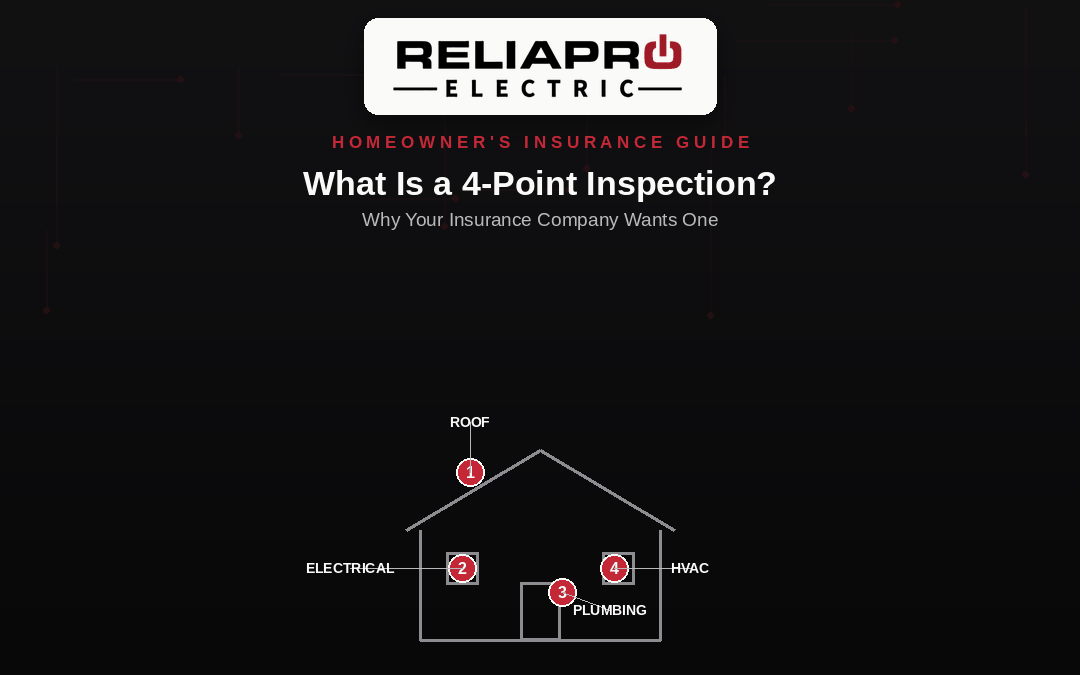
If you’ve bought an older home in Florida, refinanced, or renewed insurance on a property with some age on it, you’ve probably run into the term “4-point inspection” — often as a requirement you didn’t see coming until an insurance company asked for one. Here’s what it actually is, why it exists, and what happens if it turns up a problem.
What a 4-Point Inspection Actually Covers
A 4-point inspection evaluates four major systems in a home:
- Roof — age, condition, and remaining useful life
- Electrical — panel type, wiring type, and overall condition
- Plumbing — pipe materials and condition, and signs of leaks or past issues
- HVAC — age and functional condition of the heating and cooling system
Unlike a full home inspection (which a buyer typically orders before purchase and which covers far more ground), a 4-point inspection is narrowly focused on these four systems, specifically because they’re the ones most likely to cause major insurance claims — fire, water damage, or system failure.
Why Insurance Companies Require Them
Insurers use 4-point inspections to assess risk on homes over a certain age (commonly 25–30 years, though this varies by carrier). Older homes are statistically more likely to have outdated electrical panels, aging roofs nearing the end of their service life, older plumbing materials known for failure, and HVAC systems well past their expected lifespan — all factors that increase the likelihood of a claim.
Rather than declining to insure older homes outright, insurers use the 4-point inspection to identify which specific systems are still sound and which need attention, then price or condition coverage accordingly.
What Happens on the Electrical Side
The electrical portion of a 4-point inspection typically looks at:
- Panel type and brand — some older panel brands and types (certain models known for safety issues) are specifically flagged by insurers regardless of the panel’s apparent condition
- Wiring type — aluminum branch circuit wiring, common in homes built in a certain era, is a frequent flag, since it carries known fire risk if not properly addressed
- Panel capacity and condition — signs of overheating, improper wiring, or a panel that’s clearly overloaded or outdated
- Overall code compliance — obvious violations or unsafe conditions that stand out during a visual inspection
What Happens If the Inspection Flags a Problem
A flagged electrical issue doesn’t necessarily mean a denied policy — it more commonly means the insurer requires the issue to be corrected within a specific timeframe to maintain or bind coverage. This is precisely the situation where getting the repair done quickly, by a licensed electrician who understands what insurers are looking for, matters most: a delayed repair can mean a delayed or lapsed policy.
Common electrical fixes tied to 4-point inspection flags:
- Replacing a flagged panel brand or type
- Replacing aluminum wiring or properly addressing it with approved connectors
- Correcting improper wiring or overloaded circuits
- Bringing obvious code violations up to current standards
What Homeowners Can Do Proactively
If you own an older home and haven’t had a 4-point inspection recently (or are anticipating one for a policy renewal or refinance), having a licensed electrician assess your panel and wiring ahead of time — rather than waiting for the inspection to surface a problem — gives you more control over the timeline and the repair, rather than scrambling once an insurer sets a deadline.
The Bottom Line
A 4-point inspection exists to protect both the insurer and the homeowner from the real risks that come with aging home systems, and the electrical component is frequently where issues turn up. Addressing a flagged panel or wiring issue promptly, with a licensed electrician, is usually the fastest path back to a bound or renewed policy.
Reliapro Electric provides 4-point inspection repairs throughout Milton, Pensacola, Gulf Breeze, and the surrounding Northwest Florida area, including panel and wiring corrections needed to satisfy insurance requirements. If you’ve received a 4-point inspection report with an electrical flag, request service and we’ll get it corrected quickly.